An Augmented Reality Holographic Construction Pavilion
Space & Fun & Installation
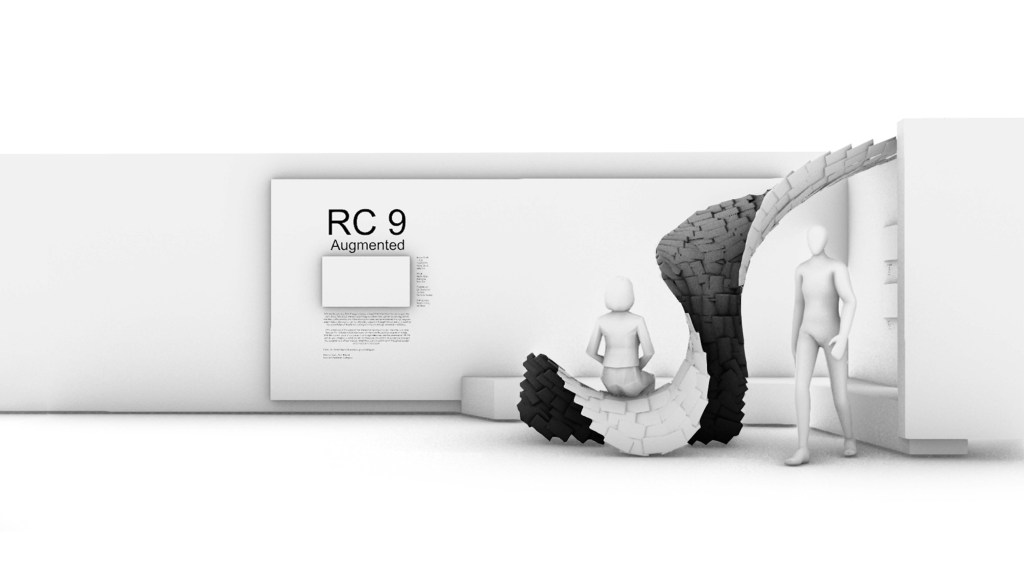
Individual Work Exhibition on B-Pro Show UCL 2018
06.2018-08.2018
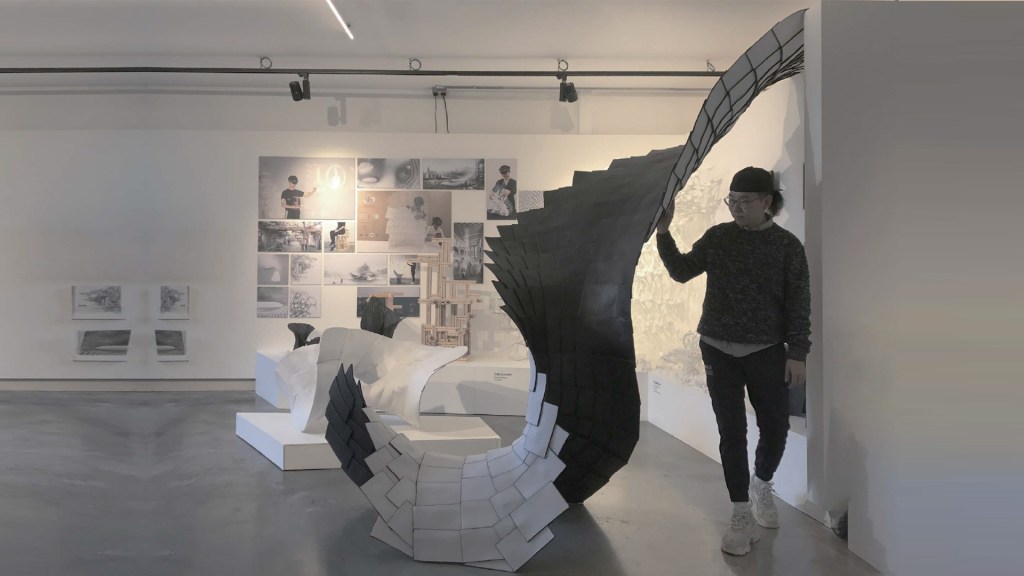
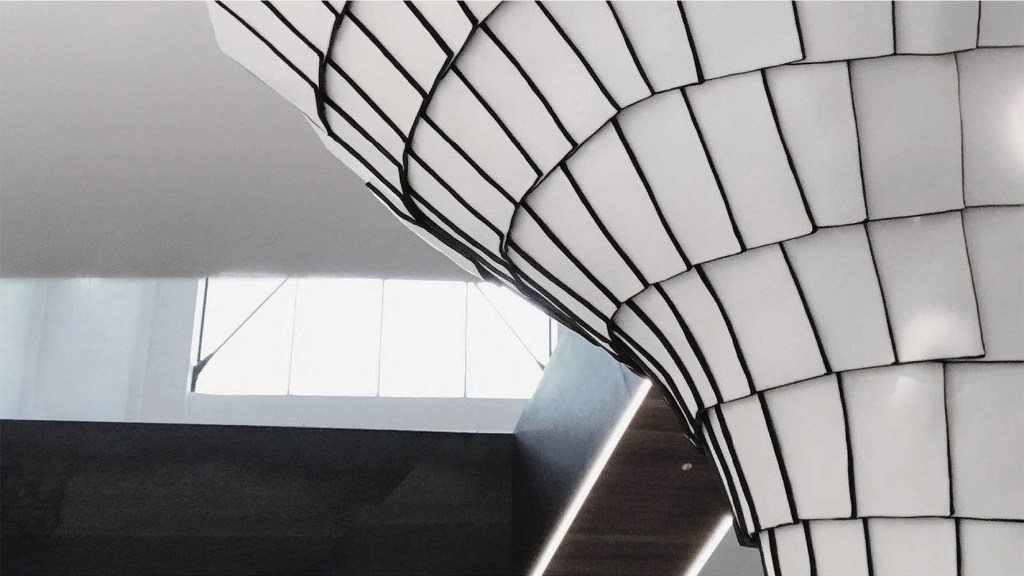
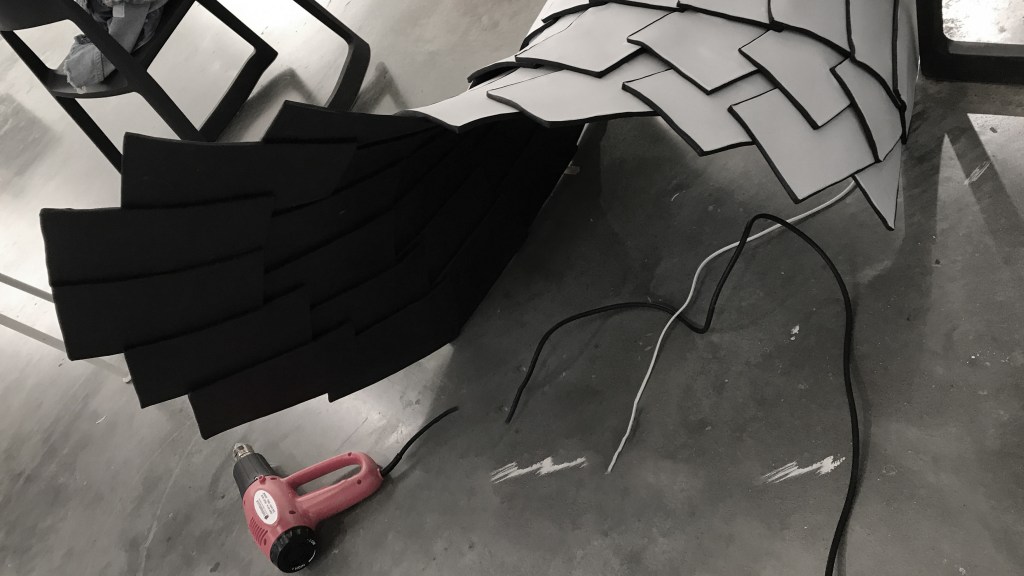
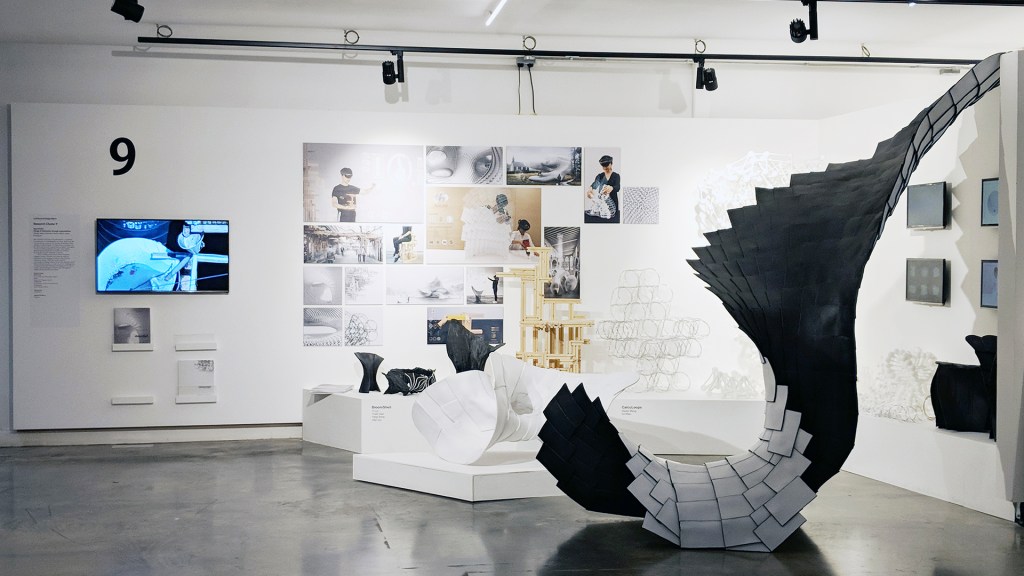
Project BloomShell explores continuous double curved surfaces assembled by a single type of component tile. As the tiles are made from a synthetic custom material polyurethane foam board laminated by WBA sheets each tile can be bent to the desired curvature by applying heat. Advantage of this material is that shapes can be heat-bent without a predefined mould, avoiding the need for additional joints for panel-to-panel connections. Likewise, opting for a single type of malleable tile, enables creation of various outputs while allowing the builder to change the design at any point during the construction process.
Early BloomShell studies utilize unique tiles in order to describe a given surface. This was later abandoned in favour of a unified panel system to allow for greater flexibility. However, it is worth discussing the initial approach, as it required the use of computer vision in order to identify different panels and provide builders with instructions on labelling and positioning of a panel on the overall surface. At this stage of development, a higher degre of control in producing desired surfaces was achieved based on a mesh relaxation algorithm. Further development of digital tools focused on establishing a workflow for penalization of digital surfaces and output of instructions for physical execution. An ‘auto labelling system’ was established—an AR-based workflow which assists human builders to identify each of the prefabricated panels using computer vision analysis. Initially, the builder shows the computer the panel which needs to be identified, after which the computer analyzes pixel information of the screen and detects the silhouette of the panel, identifying the piece within the overall surface. Once the piece is identified by the computer, all the necessary information about the piece, including label number and panel position on the overall surface, is sent back to the AR device and communicated to the builder as a hologram. The builder who is wearing the AR device can then custombend the piece panel by panel following the holographic instructions. Further, any other information, such as finish type, etc., can also be embedded within this process.
This study tested the degree of accuracy of execution within the AR-assisted assembly process. However, since each part had to be custom-made with its precise position within the larger whole, this resulted in a linear process of fabrication, where adjustments during the construction process were not possible without negatively affecting the outcome. For this reason, a shift to a unified tile system was made, allowing for a greater degree of freedom during the assembly process, while compensating for any imprecision and accumulated error during the construction. Using unified tiles provides for greater flexibility in the design outcome, allowing designers to produce different design outcomes from furniture to building elements, etc. In order to deal with this variety, an AR user interface was developed, allowing designers to freely choose different input parameters to produce desired products.

As the material is lightweight, the direction of the panels on the desired surface does not fundamentally change the structural properties of the surface itself. This was turned into an intuitive design feature, allowing builders to make changes to the orientation of the panels on a local scale while maintaining the desired shape on a global scale. Once again, computer vision recognition modelling was used in order to achieve this local-global interface. Example of this is shown in Figures 7 and 8, illustrating a digital model of a self-standing wall that is initially suggested by computer calculation. However, during the assembly process, the builder decides to change the directionality of the next panel, and accordingly, the computer recalculates the placement of the remaining panels, while keeping the initial global shape. This process can be done iteratively anytime during the building process. Finally, an 1:1 physical prototype was produced to illustrate the idea, in addition of a larger scale architectural speculation, as shown on the Figure 10. Although, the polyurethane foam boards can be understood as a proxy material, used to illustrate the concept, the proposed system is adaptable to any sheet material with enough flexibility, allowing it to be bent without the use of moulds (i.e. veneer, sheet metal, etc.).


 YSDesign