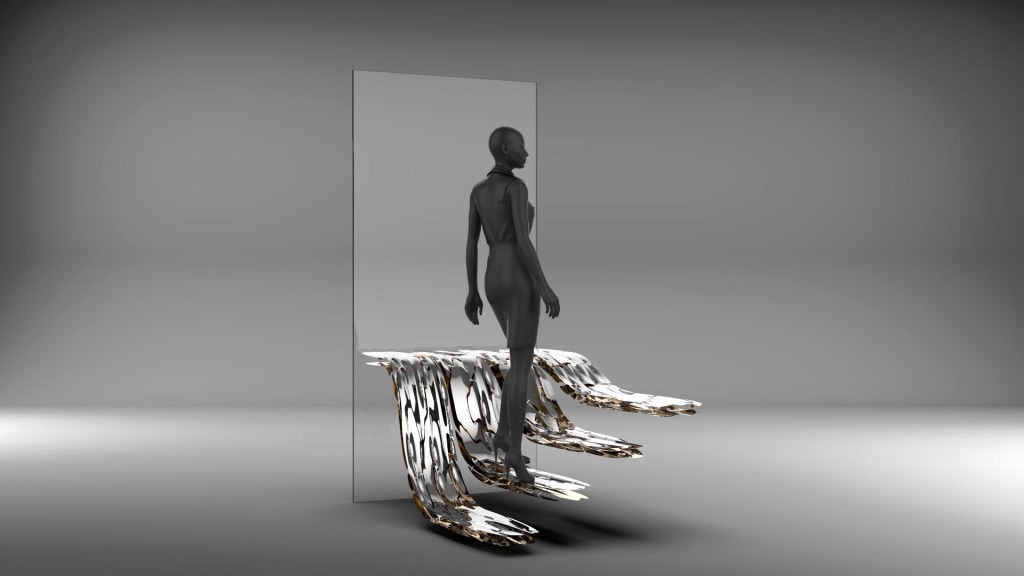
An Across Scales Stair by Robotic Fabrication
Space & Fun & Furniture
Individual Work CITA KADK Workshop 2020 DigitalFutures
06.2020-07.2020
New computational models open up new paradigms of material address. These enable us to interface and design performance across interdependent scales of material behaviour. This workshop will explore how ML can be used within a multiscale modelling framework for robotic incremental sheet metal forming. Moving through a structured sequence of modelling activities, participants will be introduced to concepts, methods and models at the scales of structure, panel, pattern and material. We will use a range of models to inform, predict and and manage the properties of thin metal sheets, propose designs, and test through remote fabrication at CITA’s robot lab.
The workshop explores how ML can be used within a multiscale modelling framework for robotic incremental sheet metal forming. This is achieved through a series of investigative studies at different scales, coupled with design explorations and fabricated samples and prototypes. Each session starts with a tutorial by CITA staff where particular design tools and workflows are explained. These are used and explored to develop for design speculations at different scales. Students will deliver at the end of each session visual outcomes of their explorations. “Fungal Architecture”.
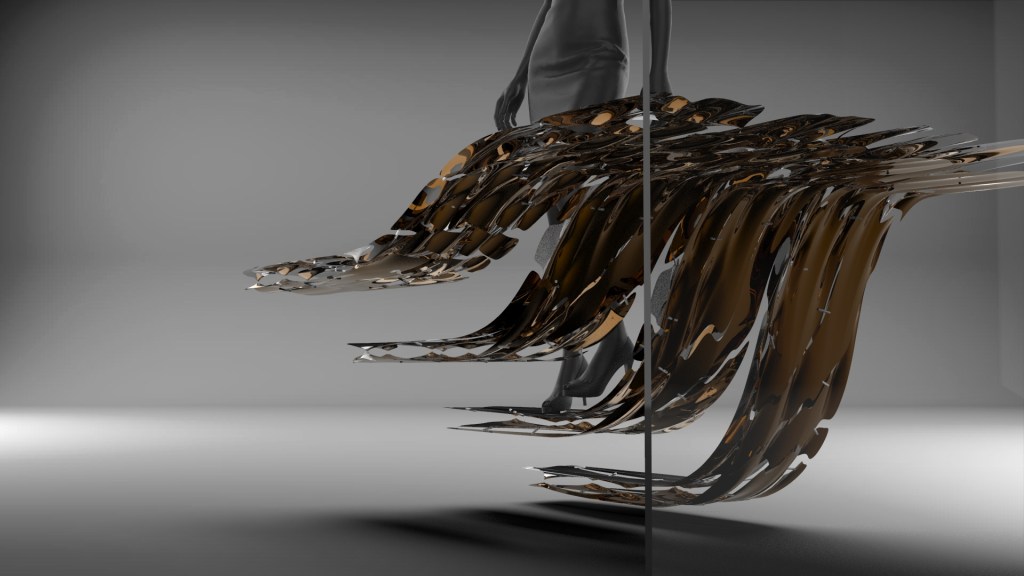
“Shape Modelling & Discretization” session looks into computational methods for freeform thin shell surface composition at the macroscale and workflows for panel segmentation
“Machine Learning for Structural Prediction” session explores alternative methods to macroscale Finite Element Analysis using a trained cGAN Neural Network directly within the design environment
“Machine Learning for Patterning” session explores the potentials of cGAN Neural Networks as generative design tools for responsive patterning at a macroscale level
“Material Scale modelling” session looks into computational workflows for representing the effects of forming transformation on the material at the microscale.
“Fabrication Toolpath” session introduces computational methods to transform the generated panel geometries into robotic fabrication instructions. The students will be connected remotely to the CITA Robotics Lab and UR5 robots for panel manufacturing through incremental sheet forming.
“Documentation” session introduces representational protocols at different scales of design Additionally, every day a CITA talk occurs introducing the students to recent research works, topics include “Nature of Data for Machine Learning”, “Hyper-Specific material Practices”, “Textile Systems” “Fungal Architecture”.

 YSDesign